Berberine is a plant compound sold as a dietary supplement. No large trial has tested it together with semaglutide or tirzepatide, so nobody can call the combination proven safe or proven helpful. A 2026 review of berberine-drug interactions describes people on GLP-1 medicines who add berberine on their own as an unstudied population. It also treats additive blood-sugar lowering as a theoretical concern, not a documented interaction. The sensible move is to tell your prescriber before you add it, and to know what each product can and cannot do.
This guide covers how berberine compares with GLP-1 medicines, what is known about combining them, and what to review with a clinician.
Berberine has been nicknamed “nature’s Ozempic” on social media. The name spread because berberine is linked to glucose regulation, lipid metabolism and energy production. Some people on a GLP-1 medicine then wonder whether adding it will speed things up, protect their blood sugar or help when progress slows.
These are reasonable questions, and the answer starts with a distinction. Pharmacy Times separates biochemical plausibility from clinical equivalence. Berberine may influence metabolic markers. It does not replicate GLP-1 receptor pharmacology, and it lacks outcomes-grade obesity evidence.
People also search for berberine in a few different situations:
Each situation calls for the same first step: a conversation with whoever manages your prescription.
The gap in evidence is the clearest part of this topic.
The U.S. National Center for Complementary and Integrative Health says the evidence that berberine causes weight loss is inconclusive. A 2022 review it cites found decreases in weight and BMI, mainly at doses above 1 gram daily and beyond 8 weeks. Many of those studies had a high risk of bias and inconsistent results.
Other analyses point the same way:
The signals are about metabolic markers more than about weight. Berberine is a legitimate area of research, and the findings are modest.
Semaglutide and tirzepatide were tested in large randomized trials built to measure weight loss.
| Berberine supplement | Semaglutide or tirzepatide | |
|---|---|---|
| What it is | Dietary supplement | Prescription medicines |
| Main research focus | Glucose and lipid markers | Weight loss and metabolic health |
| Reported weight change | Under 1 kg on average in the 2025 meta-analysis | About 15% (semaglutide, STEP-1) to 20.9% (tirzepatide 15 mg, SURMOUNT-1) |
| Study quality | Often high risk of bias | Large randomized, placebo-controlled trials |
| Common side effects | Nausea, abdominal pain, bloating, constipation, diarrhea | Mostly gastrointestinal, often during dose escalation |
| FDA approval for safety and effectiveness | Not applicable to supplements | Approved products exist; prescribed by a licensed clinician |
The numbers are not comparable one to one, since the trials differ in design and population. They still show why a supplement should not be treated as a stand-in for a GLP-1 medicine. Pharmacy Times also notes there is little evidence that berberine directly increases satiety.
There is no documented rule that says you cannot. There is also no trial that says you can. That is the honest state of the science.
The 2026 interaction review lays out three theoretical concerns when berberine is combined with GLP-1 therapy:
The review says dedicated pharmacokinetic and clinical studies are needed. Its expert perspective is that a theoretical interaction should prompt medication reconciliation and monitoring. It should not be presented as a proven berberine-GLP-1 interaction.
In practice, that means a short conversation: give your prescriber the exact product, the dose per serving and how often you take it. If you are on compounded semaglutide, our physicians can review your full supplement list during your ongoing care.
The same logic applies to tirzepatide. No major randomized trial tests it with berberine, so there are no figures for the combination.
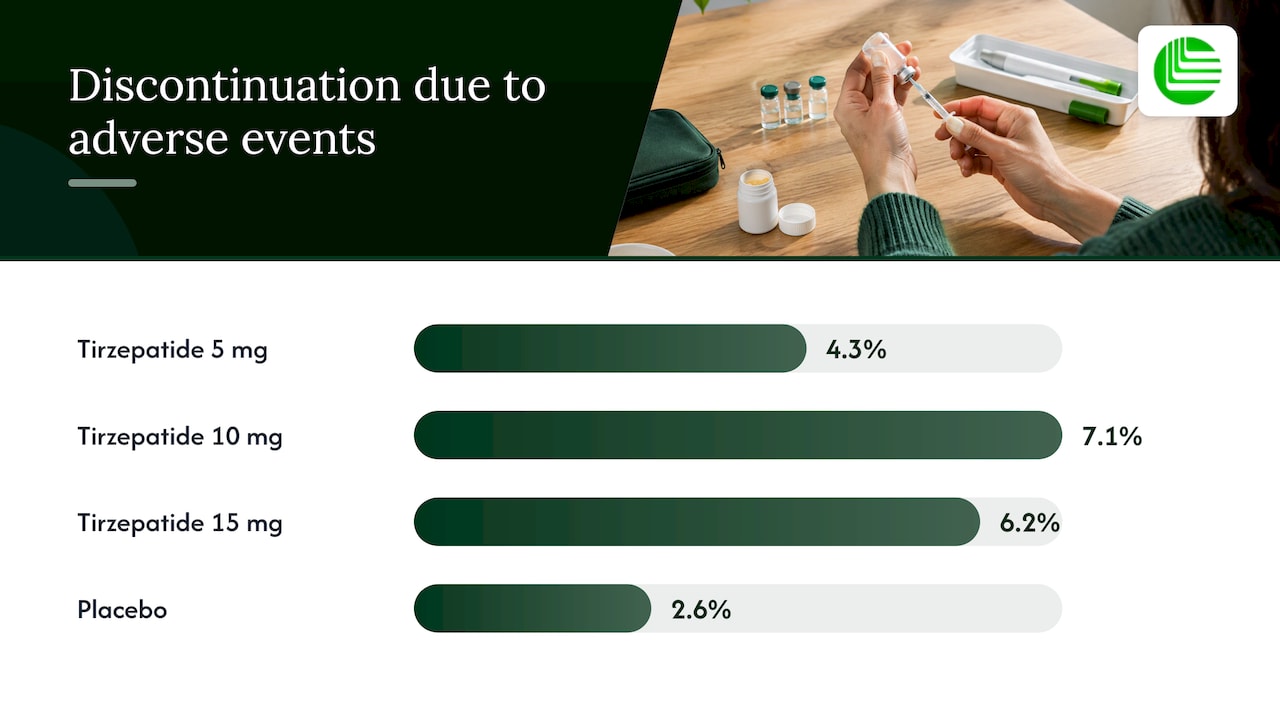
What is known comes from each side separately. In SURMOUNT-1, gastrointestinal events were the most common adverse events with tirzepatide. They were generally mild to moderate and occurred mainly during dose escalation. Discontinuation because of adverse events was 4.3%, 7.1% and 6.2% at 5, 10 and 15 mg, versus 2.6% with placebo.
NCCIH lists nausea, abdominal pain, bloating, constipation and diarrhea among reported berberine side effects. The overlap is the practical issue. If you start both within the same weeks, and your stomach reacts, you will not know which one is responsible. That makes it harder for your clinician to adjust your dose with confidence.
A simple habit helps: change one thing at a time, and keep a short log of your dose, any supplement and any symptoms. Our tirzepatide timeline shows what the early weeks of treatment can look like, so you know what to expect from the medicine alone.
This is the list we would want any patient to go through with a clinician or pharmacist before adding a supplement to a GLP-1 plan.
Contact your prescriber or seek urgent care if you have severe or persistent vomiting, severe abdominal pain, fainting, or signs of very low blood sugar such as shakiness, sweating and confusion.
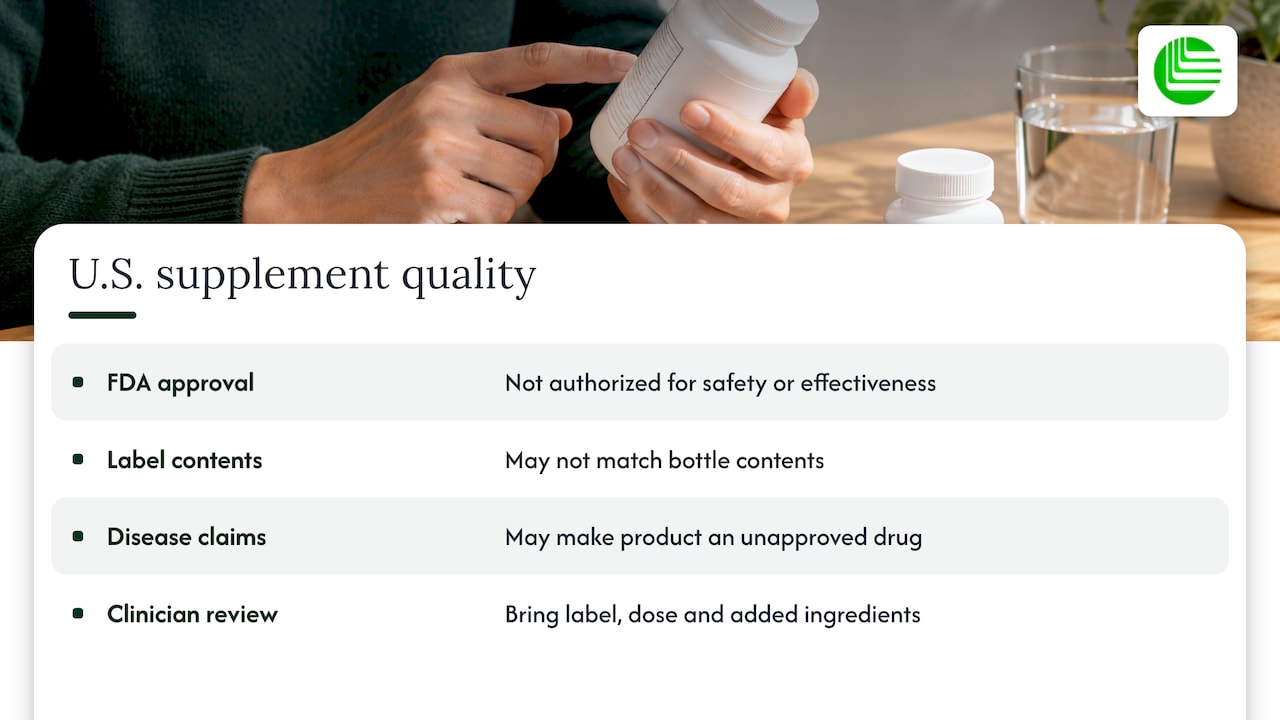
Berberine is sold in the U.S. as a dietary supplement. The American Academy of Family Physicians notes that the FDA does not have authority to approve dietary supplements for safety and effectiveness, and that label contents may not accurately represent what is in the bottle. Harvard Health makes a similar point: supplements are not regulated like prescription drugs before they reach shelves, so the amount of berberine in a product is not guaranteed. It also reports gastrointestinal effects and potential effects on how the body metabolizes medicines.
Claims matter too. In a January 2026 warning letter, the FDA said berberine products marketed with claims to treat or mitigate disease are drugs under federal law and, without approval, may be unapproved new drugs. A bottle that promises to act like a prescription is a signal to be careful.
When you tell your clinician about a supplement, bring the bottle or a photo of the label. The exact ingredient list, the dose per serving and any added ingredients (cinnamon, chromium, green tea) are what a pharmacist needs for a proper review.
Berberine may have a place in conversations about cholesterol or glucose, between you and a clinician who knows your labs. It does not replace a GLP-1 medicine if your goal is clinically meaningful weight loss. The evidence for weight loss from berberine is a few hundred grams to a kilogram in pooled analyses. The trial evidence for semaglutide and tirzepatide is measured in double-digit percentages of body weight.
If you want to support your treatment, the tools with the best track record are the ones built into good weight management: enough protein, strength training to protect lean muscle, sleep, and steady follow-up. Our guide to sustainable weight loss goes through these habits, and our piece on GLP-1 with metformin shows how a clinician approaches another glucose-related medicine alongside a GLP-1.
We hear this question often: “Can I add berberine to my GLP-1?” Our answer is to treat the GLP-1 medicine as the foundation and to have every supplement reviewed against it.
Semaglutide and tirzepatide are the options with large randomized trials showing meaningful weight loss. We built Oak Longevity around making that care reachable: a health questionnaire reviewed by a licensed physician, medication delivered to your door, and ongoing support from physician-led guidance and health coaching. Our program is designed to pair weight loss with strength and lifestyle protocols that help preserve lean muscle and support metabolic health.
If you take or are considering a supplement, tell us. Medication reconciliation is a normal part of good care, and it is much easier to do with a complete list than with surprises. Keep one change at a time, keep a log, and let your physician help you decide what to add.
Eric
If you came here weighing a supplement against a prescription, our program is built for adults in the U.S. who want physician-guided treatment without in-person clinic visits. You complete an online health questionnaire, a licensed physician reviews it, and approved prescriptions are shipped to your home. We position our pricing as lower than many alternatives, with free shipping and free health coaching.
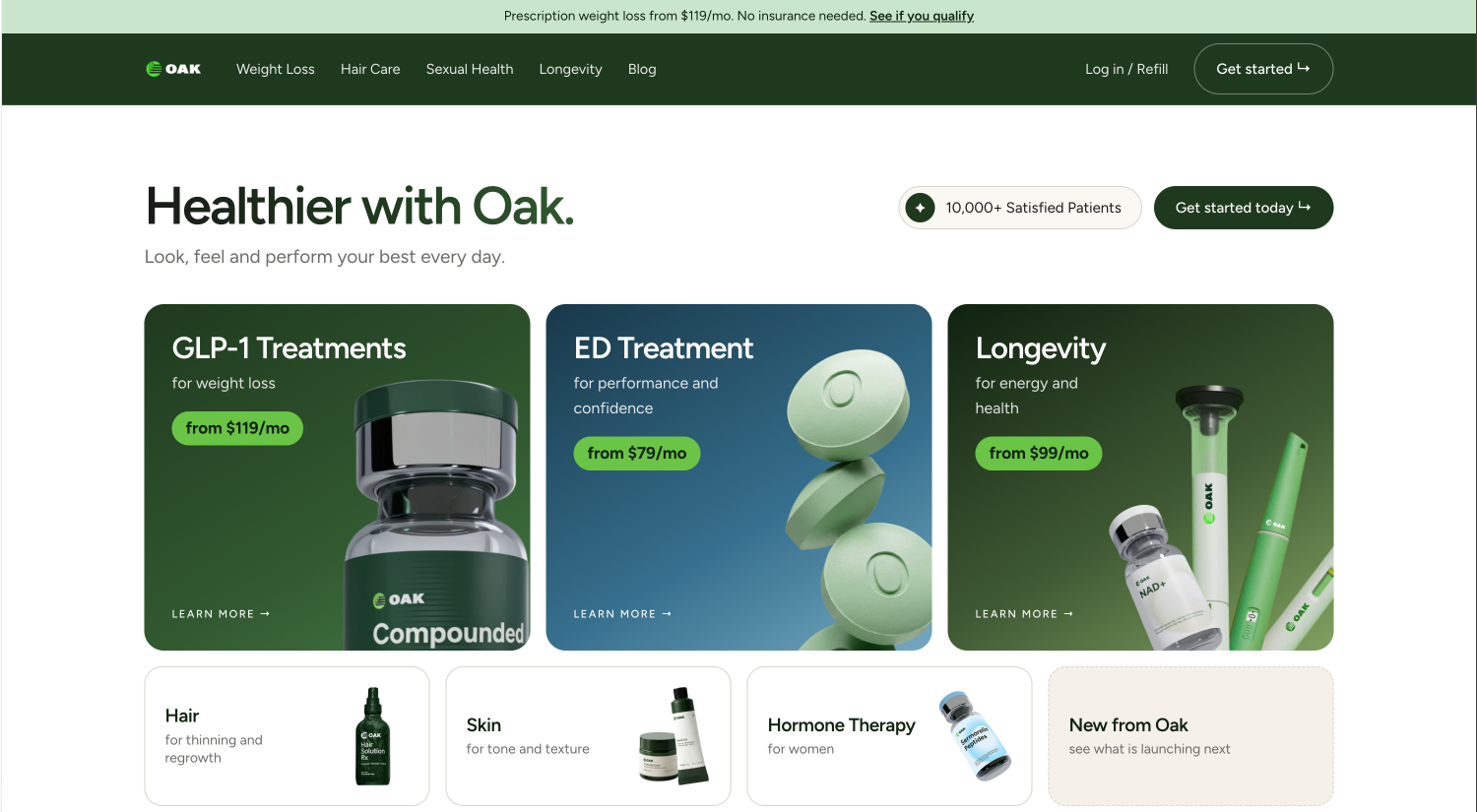
Semaglutide starts from $119 per month and tirzepatide from $185 per month, as published on our site. You can see both on our GLP-1 medication page, or go straight to compounded tirzepatide. Our semaglutide timeline explains what to expect month by month.
No major trial has tested the combination, and a 2026 review calls it an unstudied population with theoretical concerns, not a documented interaction. The main points are possible additive blood-sugar lowering and overlapping stomach side effects. Tell your prescriber and pharmacist before you add it.
No. Berberine is a dietary supplement studied mostly for glucose and lipid markers, with small and inconsistent weight effects. Semaglutide and tirzepatide are prescription medicines with large randomized trials showing double-digit percentage weight loss.
There are no trials of the pair, so there are no dosing guidelines for it. Both can cause nausea, bloating, constipation or diarrhea. If you want to add berberine, ask your clinician to review it first and introduce it separately from dose changes.
Not one with evidence equal to the prescription medicines. Pharmacy Times describes the “nature’s Ozempic” label as misleading and unsupported by scientific evidence. Supplements are also not FDA-approved for safety and effectiveness, so quality varies.
Give the product name, the dose per serving, how often you take it and why. Include all other medicines, especially anything for diabetes, and mention pregnancy plans, liver conditions or ongoing stomach problems.