Yes, asynchronous telehealth can deliver legitimate prescription weight loss care when a licensed clinician reviews your intake and determines a GLP-1 or GIP medication is appropriate for your BMI and health history. This guide covers how the model works, which medications are typically prescribed, what programs cost, and what the research actually shows about outcomes.
TL;DR:
- FDA labeling covers adults with BMI 30 or higher, or 27 or higher with an associated condition; clinicians also screen thyroid history and other risks.
- Complex medical histories may warrant a live video visit, and programs should escalate abnormal labs or concerning symptoms rather than manage everything through messages.
- Oak Longevity starts semaglutide at $119 monthly and tirzepatide at $185, including coaching and shipping, but higher maintenance doses can raise the bill.
- FDA policy limits 503A pharmacies to four or fewer prescriptions per drug product monthly without individualized clinical documentation; ask how any compounded medication is justified.
- Studies link better outcomes to structured coaching and scheduled clinician messages, while weight loss varies with dose, treatment duration, and engagement.
Asynchronous care means you fill out an intake questionnaire, share health history and photos or labs if requested, and a licensed clinician reviews everything on their own schedule, often within a day, rather than during a live video call. Synchronous telehealth still books a real-time appointment with a provider; asynchronous care swaps that live exchange for structured forms and secure messaging.
Both models can result in a valid prescription, but they fit different needs.
People who travel often, live far from specialty obesity care, or simply want a faster path to a prescription tend to get the most out of asynchronous programs.
The asynchronous path from signup to medication typically follows a predictable sequence.
Clinicians generally look at BMI, blood pressure, thyroid history, pregnancy status, and any personal or family history of medullary thyroid carcinoma before approving injectable GLP-1 therapy. Programs that flag abnormal labs or concerning symptoms typically escalate to a live video visit rather than handling everything by message.
Pro Tip: Keep a simple log of your weight, dose, and any side effects each week so your clinician has clear data to act on instead of vague descriptions.
Most asynchronous programs prescribe one of two medication classes: GLP-1 receptor agonists like semaglutide, or combined GLP-1/GIP agents like tirzepatide. FDA labeling for semaglutide-containing products indicates chronic weight management for adults with a BMI of 30 or higher, or 27 or higher with a weight-related condition such as high blood pressure or type 2 diabetes.
Injectable GLP-1s usually start at a low dose and increase every few weeks, following FDA prescribing information that sets escalation schedules and lists contraindications, including a personal or family history of certain thyroid cancers.
As of late 2026, FDA policy limits 503A pharmacies to four or fewer prescriptions per drug product per month without individualized clinical documentation, which has tightened how much compounded GLP-1 supply any single pharmacy can move. This is one reason reputable programs increasingly lean on branded, FDA-approved supply chains and reserve compounding for cases with a documented clinical rationale.
A 12-month retrospective study of a remote weight management program combining medication with app-based behavioral support found mean substantial weight loss for tirzepatide and semaglutide cohorts. Those figures reflect an intensive program with active coaching, not medication alone.
Engagement is the variable that moves outcomes most. Programs pairing medication with structured check-ins and coaching consistently outperform medication delivered with little follow-up.
Most programs charge one of three ways: medication only per fill, a membership fee plus medication, or a per-fill price that bundles in coaching. The “from $X per month” figures you see in ads usually describe the lowest dose tier, not the maintenance dose most patients land on after titration.
What’s usually included: clinician review, medication, and standard shipping. What’s often excluded: insurance billing, specialty labs, and the cost difference once you titrate to a higher, more expensive dose tier. Budget for the maintenance dose price, not the starting price, since most people end up there within a few months.
Use this checklist before enrolling anywhere.
Red flags include no named clinician on the consult, vague answers about medication sourcing, or pricing pages that only show the lowest possible dose cost.
Pro Tip: Ask directly whether your program documents individualized clinical justification for compounded medication, since that’s the line regulators now watch closely.
Oak Longevity runs an online intake that a licensed clinician reviews before approving a prescription, then ships approved medication directly to your door rather than requiring a pharmacy pickup. We provide compounded semaglutide and compounded tirzepatide programs, along with ongoing physician-led support available around the clock for dosage questions or side effects.
If you enroll, expect an intake form first, a clinician decision shortly after, and your first shipment to follow once approved.
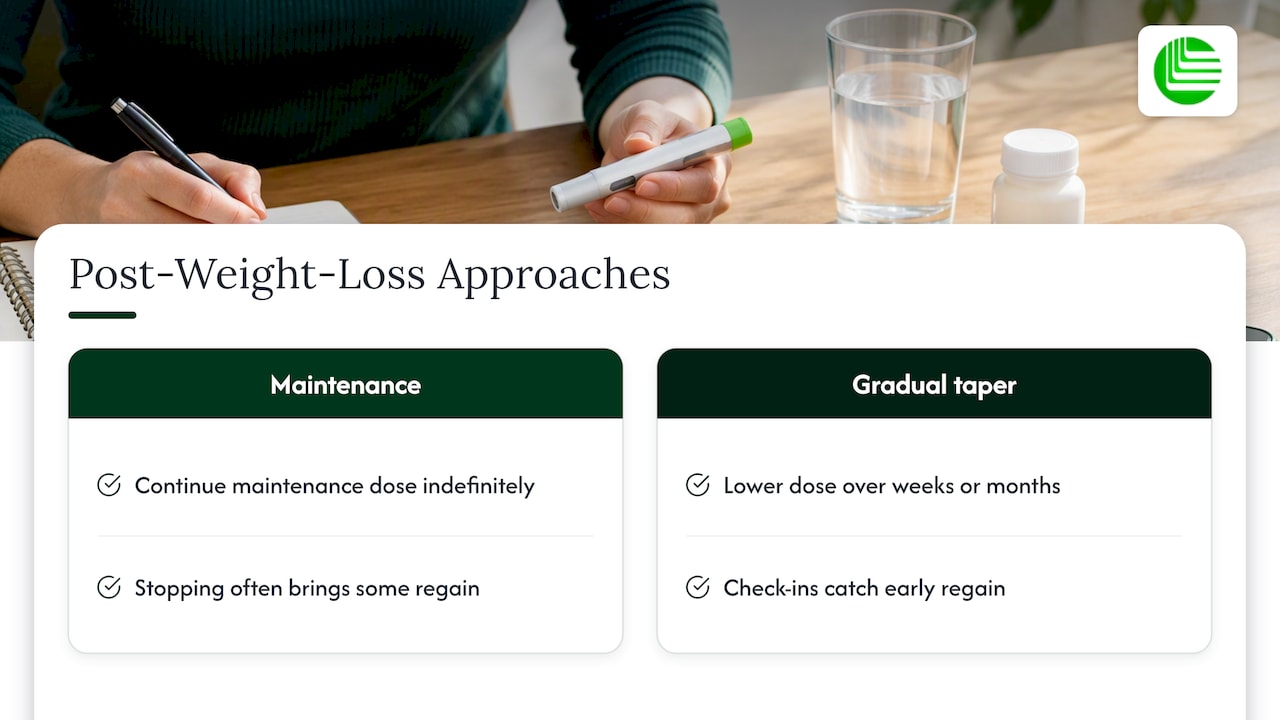
Weight loss medication works while you’re taking it, and the question of what happens after initial weight loss matters as much as the initial result. Some patients stay on a maintenance dose indefinitely once they reach their goal, since stopping often leads to some regain as appetite signals return to baseline.
Others work with their clinician on a gradual taper, lowering the dose slowly over weeks or months rather than stopping abruptly. A slower taper gives your body more time to adjust and gives your care team a chance to catch early signs of regain before they become significant.
What tends to matter most during this phase is what you built alongside the medication: protein intake sufficient to protect muscle, regular strength training, and consistent sleep and stress management. Patients who only relied on appetite suppression without building other habits tend to regain faster once the dose drops.
A good asynchronous program keeps checking in during this phase rather than treating maintenance as a hands-off period. If your program stops contacting you once you hit goal weight, that’s worth flagging, since the taper and maintenance window carries its own risk of regain and deserves the same clinical attention as the initiation phase.
Medication reduces appetite and slows gastric emptying, but it doesn’t teach you how to eat differently or build sustainable habits. That’s where lifestyle and nutrition coaching fits into an asynchronous program, even though the medication itself is delivered without live appointments.
Programs that pair medication with structured coaching tend to perform better than medication alone, based on the same service evaluations and retrospective data covered earlier in this guide. The coaching component doesn’t need to be synchronous either. Many programs deliver it through messaging, written guides, or asynchronous check-ins that fit the same convenience-first model as the medical side.
Practical nutrition support during GLP-1 treatment usually focuses on protein intake, since appetite suppression makes it easy to under-eat protein and lose muscle along with fat. Hydration and fiber intake also tend to get coaching attention, since reduced appetite can lead to inconsistent eating patterns that affect energy levels.
The goal isn’t to replace medication with lifestyle change. It’s to make sure the habits around eating, movement, and sleep support whatever progress the medication enables, so results hold up better once you reach maintenance or taper off.

Asynchronous platforms handle sensitive data: health history, photos, lab results, and payment information, often stored and transmitted without the real-time verification a live video call provides. That makes platform security a real consideration, not an afterthought.
Look for programs that use encrypted messaging for clinical communication rather than standard email, and that store health records in systems built to meet healthcare privacy standards rather than generic customer service software. Ask how long your data is retained and whether it’s shared with third parties beyond the pharmacy fulfilling your prescription.
Because asynchronous care relies on written intake rather than a live conversation, the accuracy and security of that written record carries more weight. A program that’s vague about how it protects your information, or that doesn’t clearly state who reviews your data, is worth questioning before you share health details.
Adherence drives outcomes more than almost any other factor in GLP-1 treatment, and asynchronous programs depend on you self-reporting data that a synchronous visit would otherwise catch in person. Missing doses, skipping weigh-ins, or ignoring side-effect check-ins tends to blunt results even on an effective medication.
Simple habits make the biggest difference: weigh yourself on a consistent schedule, log side effects as they happen rather than from memory weeks later, and message your care team promptly rather than waiting until your next scheduled refill. Programs that send proactive check-in prompts rather than waiting for you to reach out tend to catch problems, like inadequate titration or intolerable side effects, before they lead someone to quit treatment altogether.
Refill timing matters too. Letting a prescription lapse between fills interrupts titration progress and can mean restarting at a lower dose, which slows results and extends the time before you see meaningful change.
Asynchronous care fits people who want faster access, don’t have a specialist nearby, or simply prefer managing their health on their own schedule. It works less well for medically complex cases, significant thyroid history, or anyone who feels safer with a live conversation before starting an injectable medication.
If you do go asynchronous, three habits help: share recent labs upfront so the clinician isn’t guessing, message promptly about side effects instead of waiting, and log your weight and dose weekly so follow-up decisions rest on real data rather than memory.
— Eric
We built our program around the exact friction points that slow people down: no video call required, compounded and brand GLP-1 medications kept in stock, and free shipping with no hidden membership fees. Pricing starts at $119 per month for semaglutide and $185 per month for tirzepatide, with free health coaching included.
Getting started looks like this:
Check your options and current pricing on our semaglutide and tirzepatide page.
This article is general information, not a substitute for advice from a qualified doctor. Consult a qualified healthcare professional about your own circumstances before acting on anything here.
A simple “thank you” is enough, and you’re not obligated to explain your treatment or share medical details with anyone who comments. Many people on GLP-1 therapy find it easier to redirect the conversation toward how they feel rather than discussing numbers or methods.
Health depends on multiple factors beyond weight alone, including blood pressure, blood sugar, and activity level, and people at a range of sizes can have healthy metabolic markers. That said, FDA labeling for weight-loss medications specifically targets patients with obesity or overweight plus a related condition, since that combination carries documented health risks.
Weight loss affects mood differently from person to person, and GLP-1 medications in particular can cause mood changes in some patients that are worth reporting to a clinician right away. Programs that build in regular check-ins are better positioned to catch mood changes early than ones with minimal follow-up.
Plateaus often happen as the body adjusts to a stable dose and metabolism adapts to a lower weight, which is a normal physiological response rather than a sign the medication stopped working. Clinicians typically address a plateau by reassessing dose, reviewing adherence, and checking whether coaching or lifestyle habits have slipped.
Costs vary by program and medication, but Oak Longevity’s pricing starts at $119 per month for semaglutide and $185 per month for tirzepatide, with free shipping and coaching included. Expect the price to rise somewhat once you reach a higher maintenance dose.